


Communication is about much more than words. Long before children are speaking in sentences, they are learning that their actions, sounds, gestures and words can influence the people around them.
For parents of young autistic children or children who are developing communication skills more slowly, there are many opportunities to support this learning throughout the day. Some of the most valuable communication opportunities can happen naturally during play, meals, getting dressed, bath time and everyday family routines.
The goal is not simply to encourage more words. It is to help children discover that communication is useful, powerful and rewarding.
Start With What Your Child Already Enjoys
Children are more likely to communicate when there is something they genuinely want to communicate about.
Pay attention to the activities, toys, foods, people, songs and sensory experiences your child seeks out. These interests can become powerful opportunities for communication.
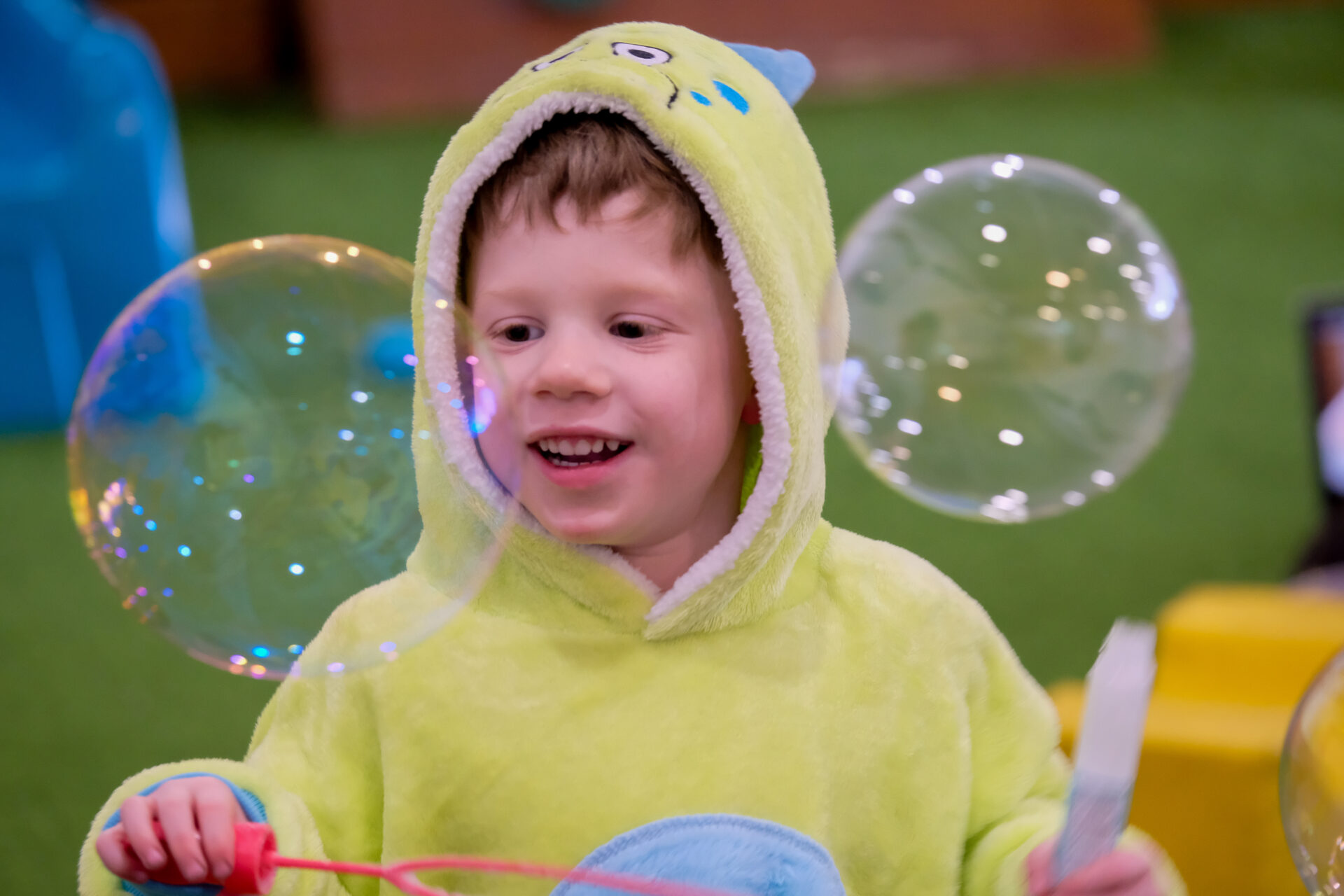
If your child loves bubbles, for example, rather than blowing bubbles continuously, blow a few and then pause. Wait and see what your child does. They might look at you, reach for the bubbles, make a sound, gesture, sign, use a picture or say “more.” It’s important to view all of these methods of communicating as valuable for early communicators.
Responding quickly teaches an important lesson:
**When I communicate, something good happens**
Create Reasons to Communicate
Sometimes adults become so good at anticipating children’s needs that children have very little reason to communicate.
We automatically open the snack, turn on the television, hand over the favourite toy or start the next part of a familiar routine.
Instead, look for small, positive opportunities where your child can initiate through some form of communication.
You might give them a small amount of a favourite snack and wait before offering more, or activate a favourite toy (e.g., spinning top) then pause so they can show you they want more. You could play chasey and wait expectantly for a giggle that tells you “do it again!” allow them a moment to make a sounds, or pause briefly during a familiar routine, or wait.
The aim isn’t to frustrate your child or deliberately withhold things they need. It is simply to build on their natural joy and enthusiasm to create **natural opportunities for communication**.
Notice All Forms of Communication
Words are only one way to communicate.
A young child may communicate by:
* looking towards something
* reaching
* pointing
* taking your hand
* making a sound
* using a gesture or sign
* giving you an object
* using a picture or communication device
* pushing something away
* approximating a word
* saying a word or phrase.
Notice all forms of communication and respond to them. If you respond to other forms of communication, it won’t make talking less likely. It will actually enhance verbal communication.
When adults consistently respond to all forms of communication, children begin to learn that communicating with another person is worthwhile.
Model Simple Language
Children benefit from hearing language that is clear, meaningful and connected to what is happening right now.
If your child is playing with a car, you might say:
“Car.”
“Go!”
“Fast car.”
“Car goes down.”
If they are eating an apple, you might say:
“Apple.”
“Yum!”
“More apple.”
Try to keep your language just slightly ahead of your child’s current communication level. A child who is beginning to use single words doesn’t necessarily need long explanations. Short, useful phrases may be much easier to notice and learn.
Expand What Your Child Says
When your child communicates, you can model the next step without requiring them to repeat you.
If your child says:
“Car”
you might respond:
“Red car.”
If they say:
“More”
you could say:
“More bubbles!”
If they say:
“Dog running”
you might respond:
“The dog is running fast!”
This allows children to hear slightly more advanced language while keeping the interaction natural and enjoyable.
Give Your Child Time to Respond
Adults often underestimate how much time a child needs to process language and formulate a response.
We ask:
“Do you want juice?”
Then almost immediately:
“Juice? Do you want juice? Yes? Want some juice?”
Instead, ask or model once and wait a few seconds. This can feel surprisingly long, but that pause creates space for your child to initiate or respond.
Watch carefully. Their response may not initially be a word. It might be a look, movement, gesture or sound.
Follow Your Child’s Lead
Communication learning is often most successful when adults join children in activities they already enjoy.
If your child is lining up dinosaurs, you don’t necessarily need to redirect them to another activity. Join them.
You might add another dinosaur, make one stomp, model “big dinosaur,” or create a simple playful interaction.
Following your child’s interests can make social interaction more enjoyable and increase the number of opportunities they have to communicate with you.
Make Communication Fun
Communication shouldn’t feel like a test.
Repeatedly asking, “What’s this?”, “What colour is it?”, or “What does a cow say?” can turn an enjoyable interaction into a series of questions.
Instead of always testing what your child knows, **comment, model and play**.
Rather than asking:
“What is the cow doing?”
you might say:
“The cow is jumping!”
Then make the cow jump dramatically off the table.
Shared enjoyment can create a powerful reason for a child to look, laugh, request, protest, comment and interact.
Communication Is More Than Requesting
Learning to ask for things is important, but communication is much broader.
Children also need opportunities to learn how to:
* ask for help
* say “no” or “stop”
* make choices
* get someone’s attention
* comment on interesting things
* answer and ask questions
* share enjoyment
* greet people
* tell someone what happened
* express feelings and preferences.
As your child’s communication develops, think about not only how much they communicate, but also why they are communicating.
Early communication is rarely perfect. Celebrate attempts, not just perfect words.
A word may be unclear. A gesture may be subtle. The act of simply orienting or reaching in the direction of a desired object is a wonderful step in the right direction. These attempts matter.
If adults wait for perfect communication before responding, children can learn that communicating is difficult and effortful. When appropriate attempts are noticed and reinforced, children are more likely to keep trying.
Build Communication Into Everyday Life
You don’t need special equipment or hours of structured practice to create valuable communication opportunities.
Think about the routines your child experiences every day: breakfast, getting dressed, travelling in the car, going to the playground, bath time and bedtime.
Each routine contains dozens of opportunities to model language, offer choices, pause and wait, respond to communication, introduce new words and enjoy interactions together.
Over time, these small moments add up.
The Most Important Message
Early communication develops through thousands of interactions with other people.
Parents can play an enormously important role by creating an environment where communication is easy, useful and enjoyable.
Notice what motivates your child. Create opportunities for them to communicate. Model simple language. Give them time. Respond enthusiastically to their attempts.
Most importantly, help your child experience the power of communication:
I can communicate with another person — and they understand me.
If you would like support with encouraging early communication, we are here to help.
You can book a FREE, no-obligation telephone consultation with our friendly and informative team. There’s no pressure, just a chance to talk through your child’s needs and explore the services that could be the best fit, whether that is with us or elsewhere.
Subscribe to our newsletter
For information about our FREE parent talks, handy resources and all our latest news.